Mega-MMDF: Benchmarking Multimodal Deepfake Detection across Diverse Forgery Pipelines with DeepfakeBench-MM
The dataset
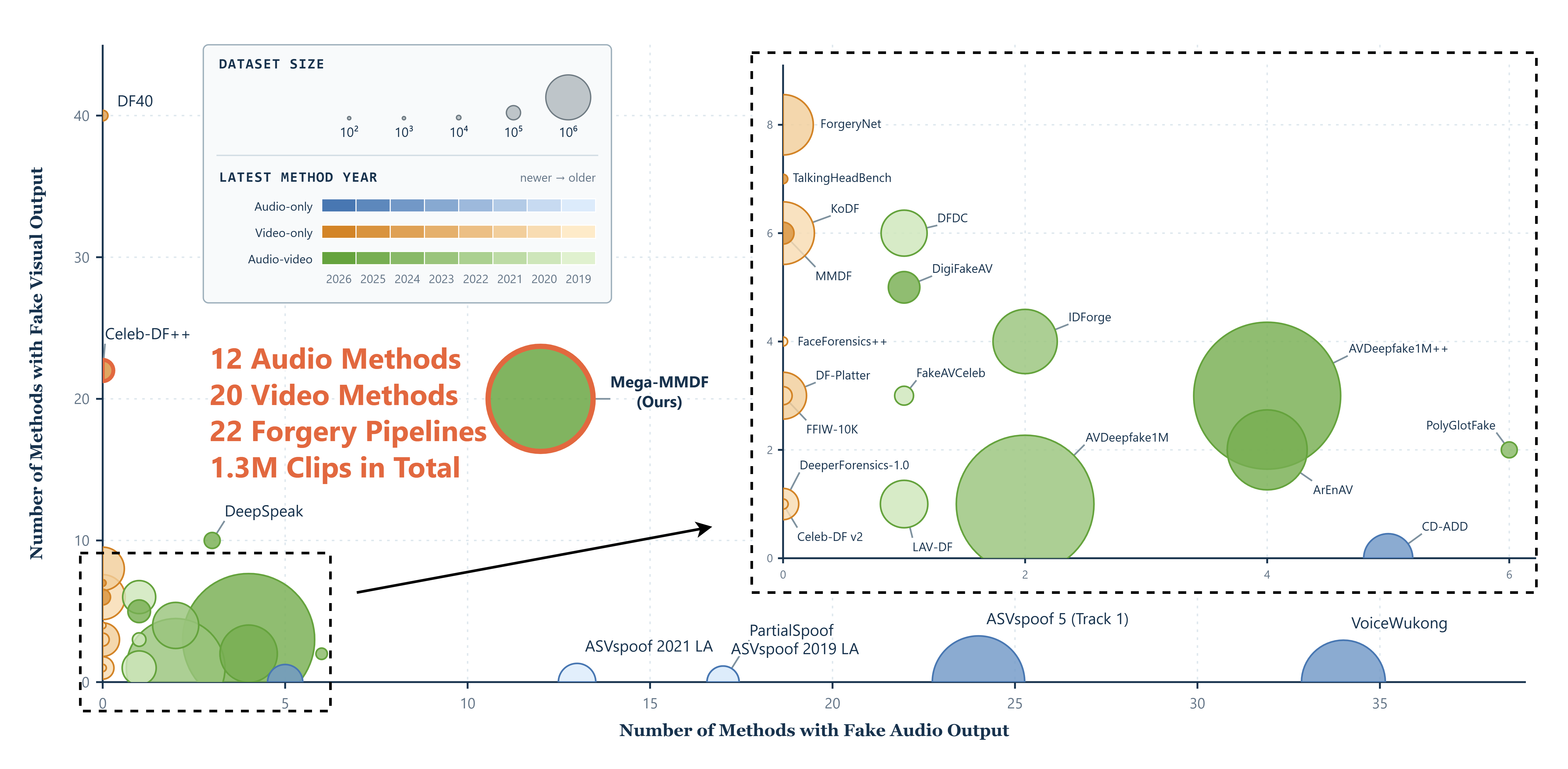
Scale and diverse
forgery pipelines.
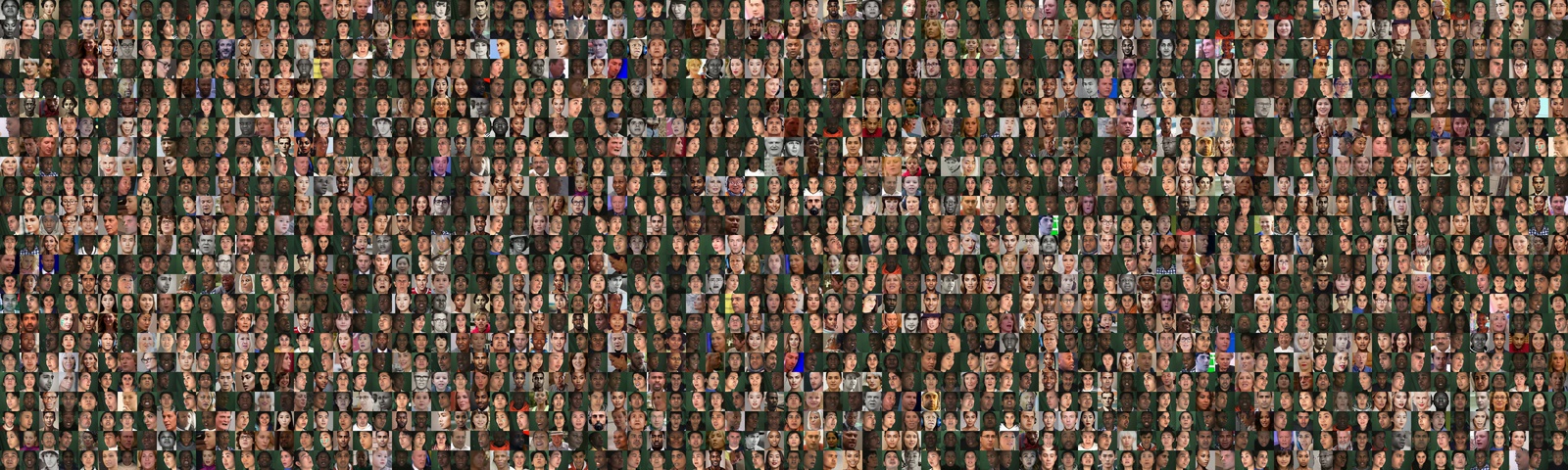
Mega-MMDF combines audio and visual forgery methods, audio-driven face reenactment, and joint audio-video generation.
methods
methods
reenactment methods
generation methods
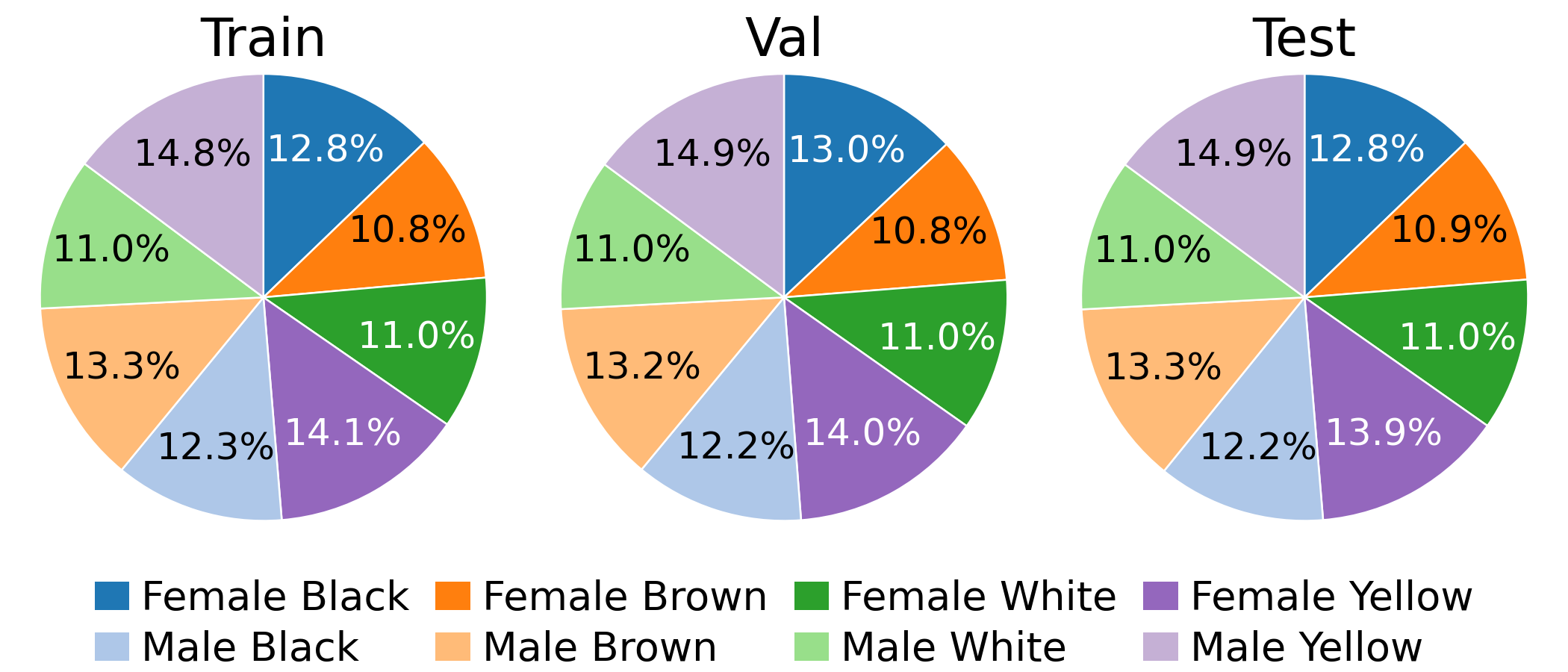
Dataset statistics
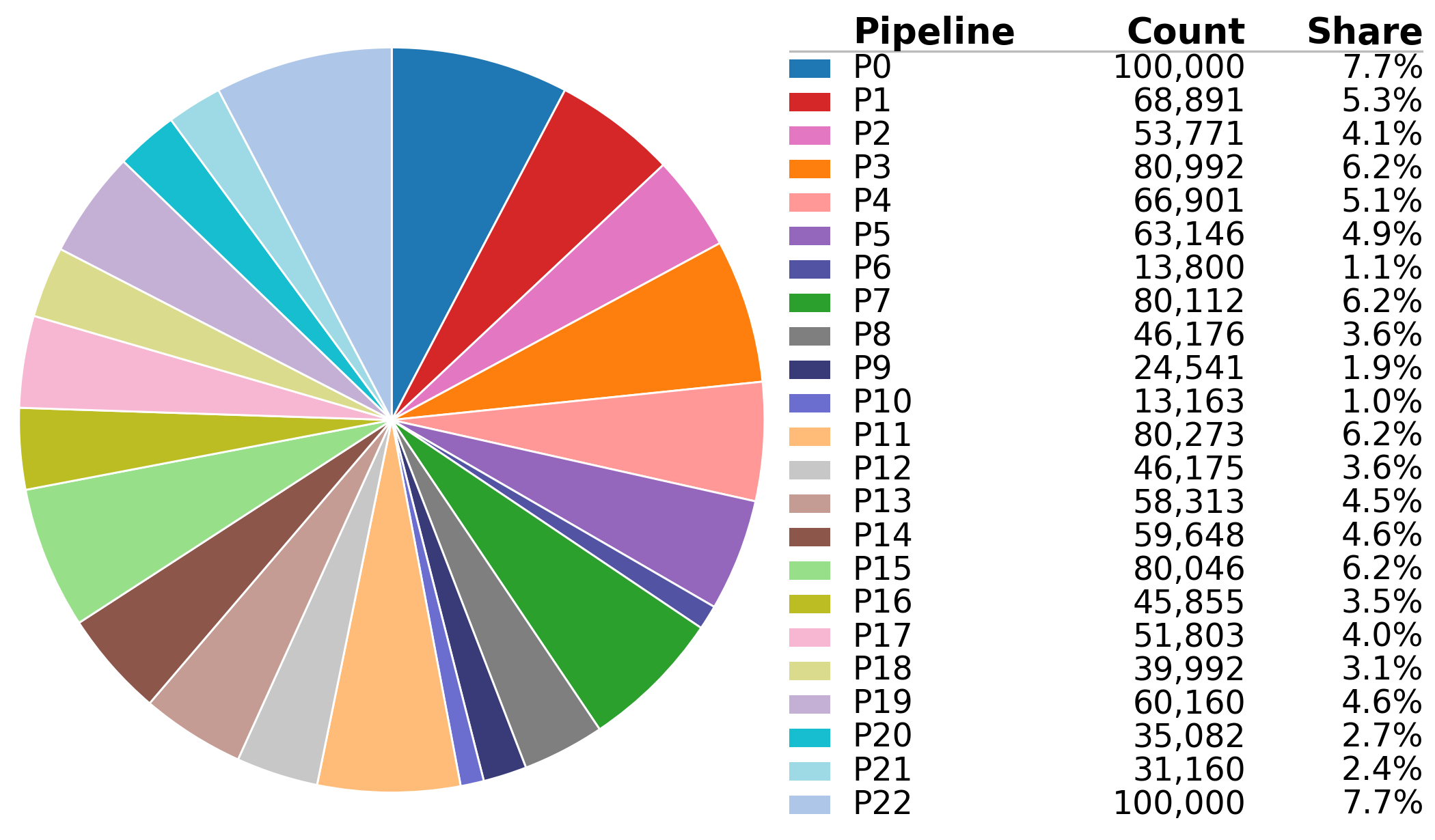
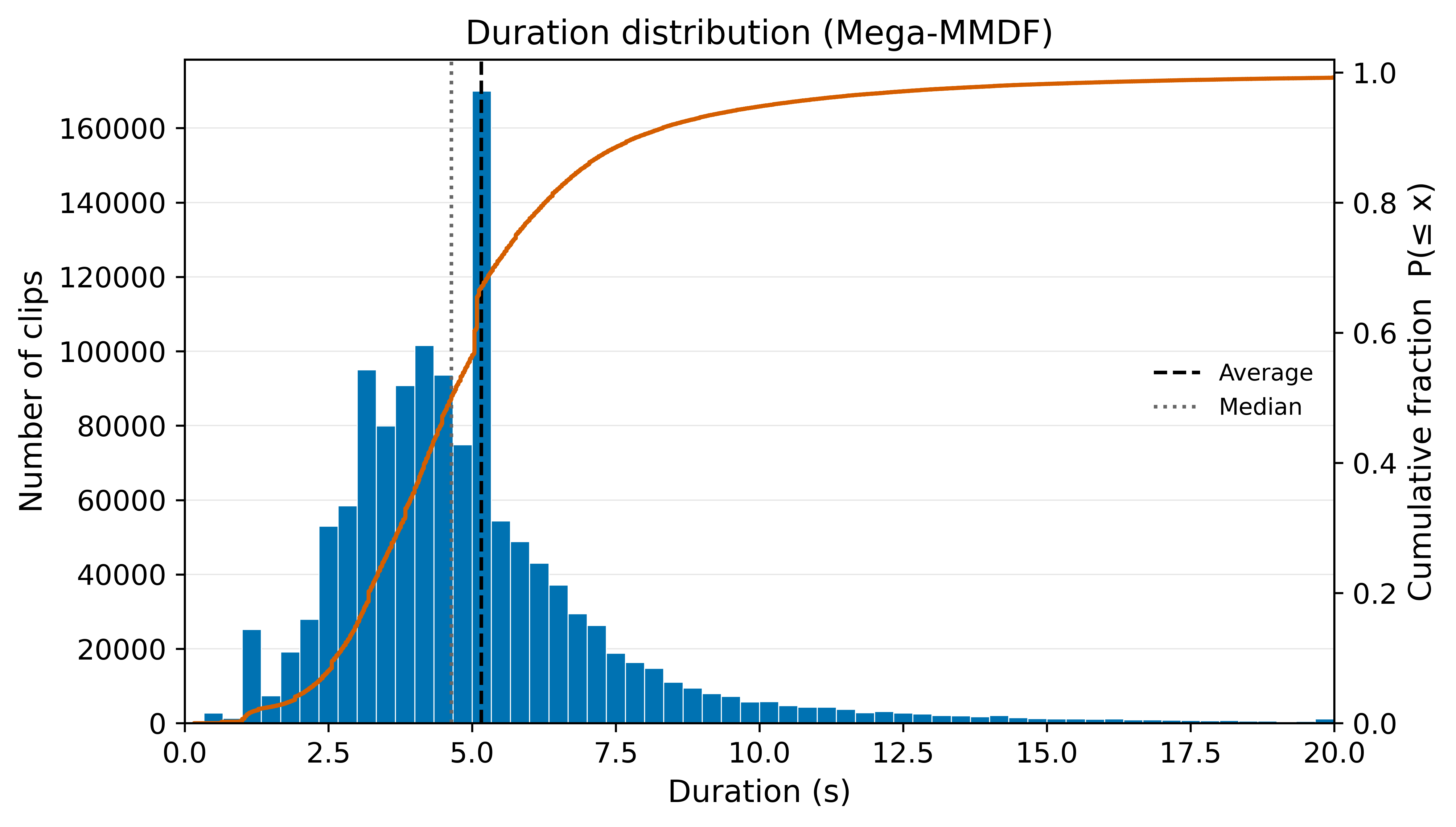
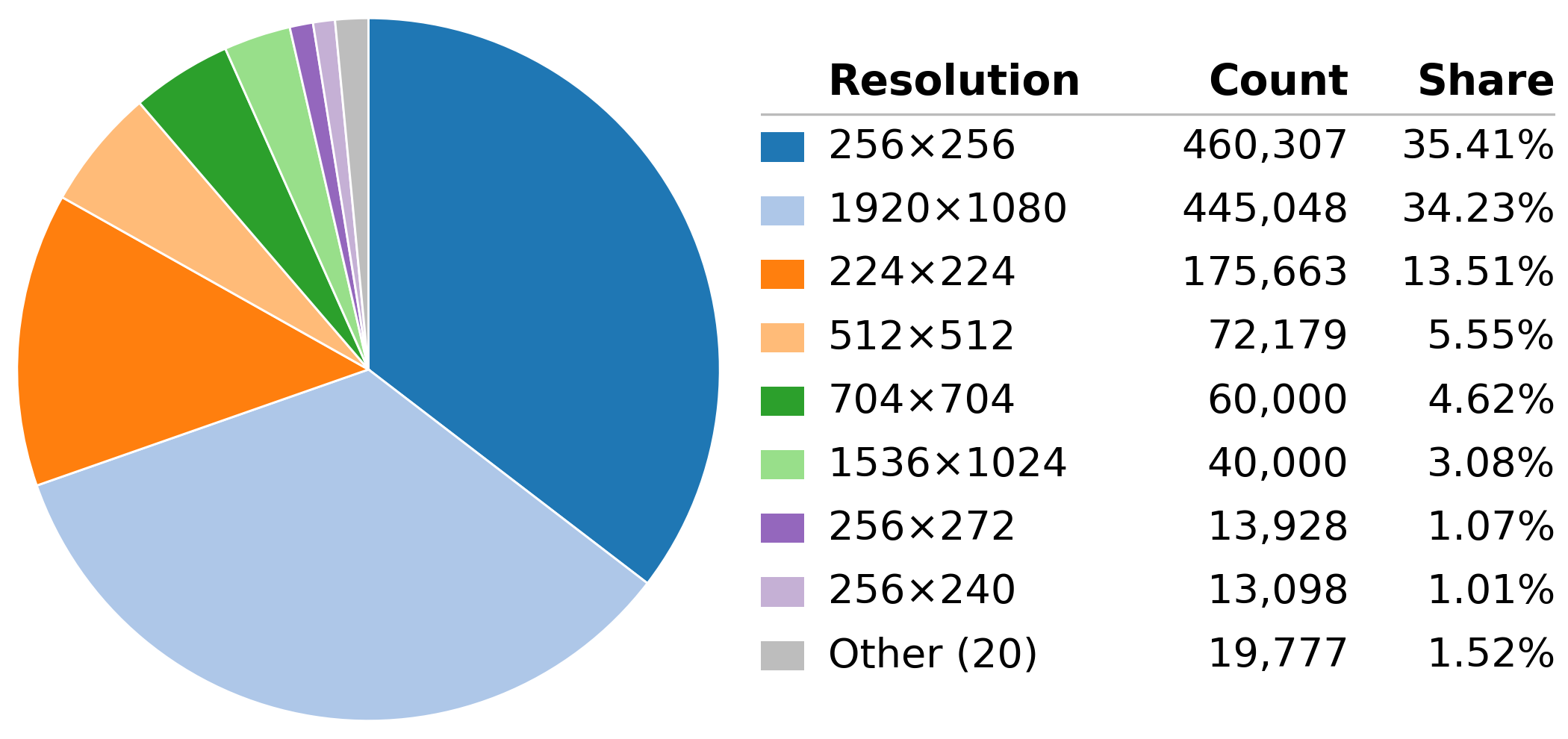
Pipeline definitions22 forgery pipelines + real reference
| ID | Audio forgery | Visual forgery | Audio-driven FR | Type |
|---|
VC: voice conversion; TTS: text-to-speech; PF: partial audio forgery; FS: face swapping; EFS: entire face synthesis; FE: face editing; FR: face reenactment; T2AV: text-to-audio-video generation. A dash denotes no operation at that stage.
Pipeline showcase
How the forgeries
are composed.
Explore 22 forgery pipelines and one authentic reference. Each slide pairs a construction diagram with video frames and an audio spectrogram.
Swipe across each image to view the full diagram or sample.
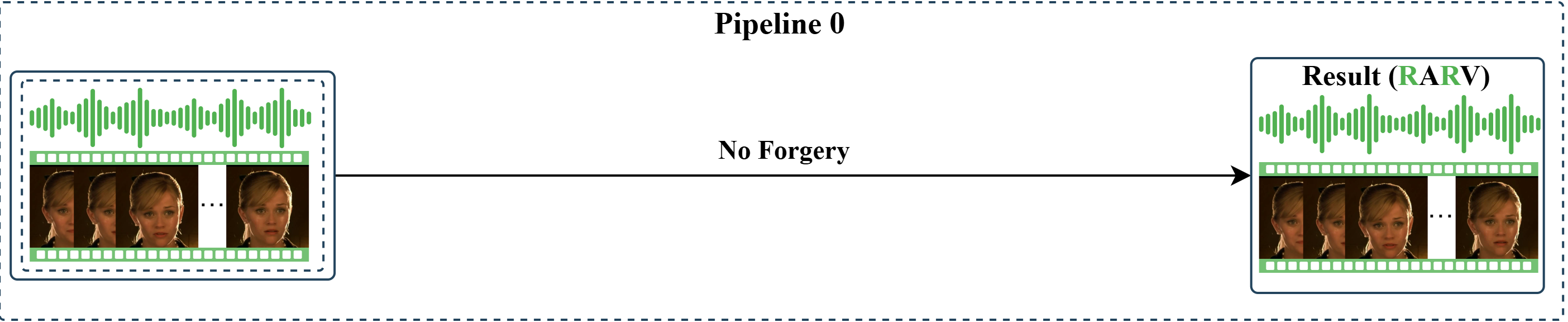

Authentic reference
Retain the original audio and video as an authentic reference.
Auto-advance · 10 seconds per slide
The benchmark
DeepfakeBench-MM.
A unified, modular codebase for training, evaluating, and extending multimodal deepfake detectors.
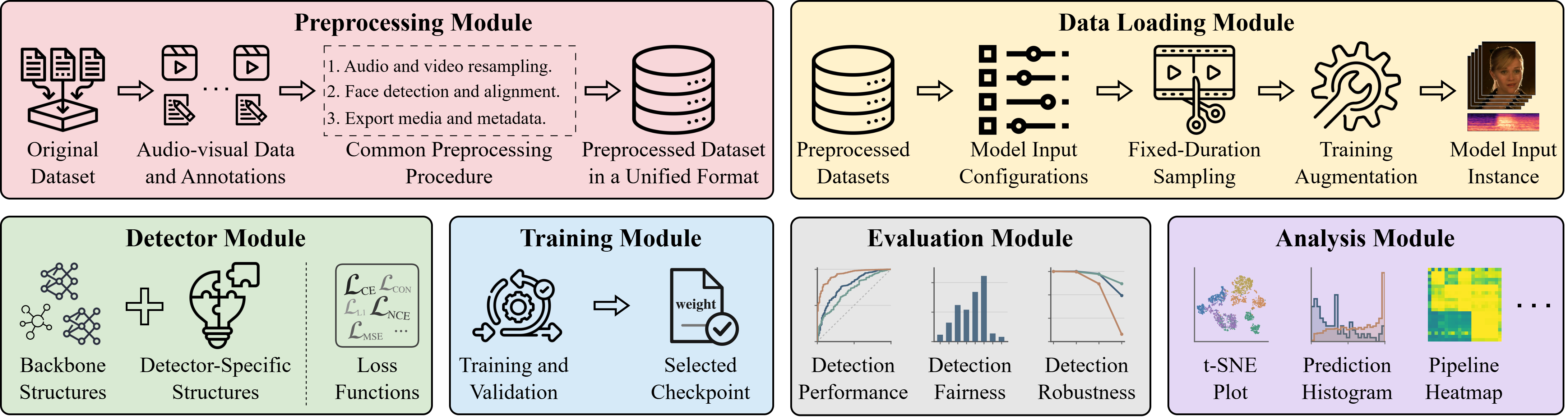
8 supported datasets
FakeAVCeleb · LAV-DF · PolyGlotFake · IDForge · Mega-MMDF · TalkingHeadBench · DigiFakeAV · MMDF
10 evaluated detectors
Baseline · AVFF · AVH · FauForensics · FGMDF · FRADE · MCL · SpeechForensics · Qwen2.5-Omni · VideoLLaMA2.1
Benchmark results
All eight test datasets.
The complete comparison.
Seven detectors trained separately on five datasets, alongside three methods evaluated without benchmark-specific training.
Scroll horizontally to view all eight datasets →
Results reproduce Table III of the paper. Average is the unweighted mean across all eight test datasets. Training-free denotes no benchmark-specific training.
Access & use
Data access and code
Mega-MMDF uses an access request on Hugging Face and a signed application form.
Request Mega-MMDF
Applications are currently closed. When they open, complete both steps.
-
Submit a Hugging Face request
Request access on the dataset page using your personal Hugging Face account.
Open the dataset page ↗ -
Email the signed application form
Complete and sign the public form. Email it to kangranzhao@link.cuhk.edu.cn with the subject
Download the application form (PDF) ↗Mega-MMDF access / YOUR_USERNAME.
Review begins after we receive both the Hugging Face request and the signed application form.
Use DeepfakeBench-MM
DeepfakeBench-MM is the benchmark for data preparation, detector training, and evaluation.
Benchmark code ↗PrepareConfigure paths and preprocess data.
TrainChoose a detector and training configuration.
EvaluateRun tests and compare benchmark results.
Citation & contact
Build on Mega-MMDF.
If Mega-MMDF or DeepfakeBench-MM supports your research, please cite the accompanying work.
Secure Computing Lab of Big Data (SCLBD)
See the Mega-MMDF dataset license for the terms of dataset use.
This project is built by SCLBD at the School of Artificial Intelligence (SAI) of The Chinese University of Hong Kong, Shenzhen, directed by Professor Baoyuan Wu. The lab focuses on research in trustworthy AI, including adversarial machine learning, agent security and safety, deepfake and AIGC detection, and data governance.
If you have any suggestions, comments, or wish to contribute code or propose methods, we warmly welcome your input.